ROSACEAE
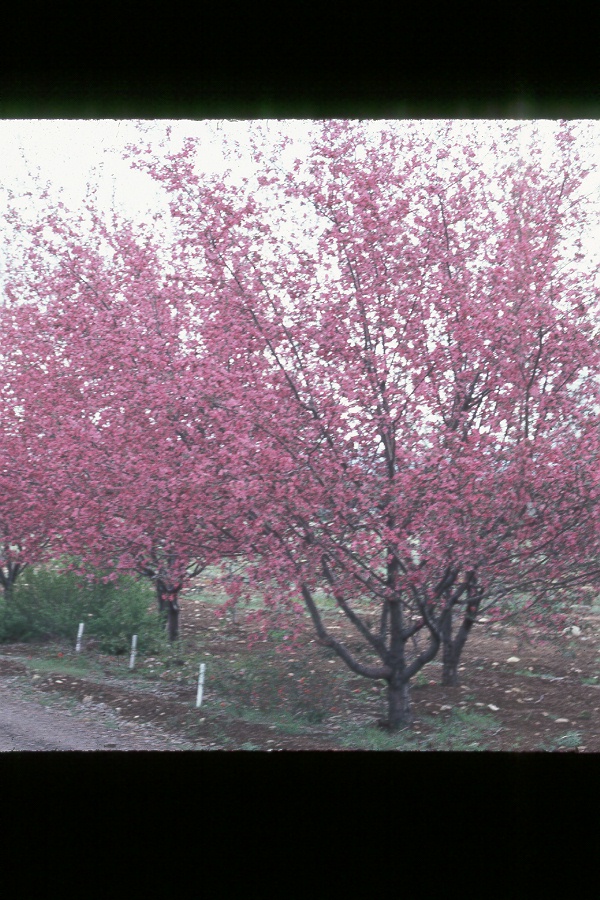
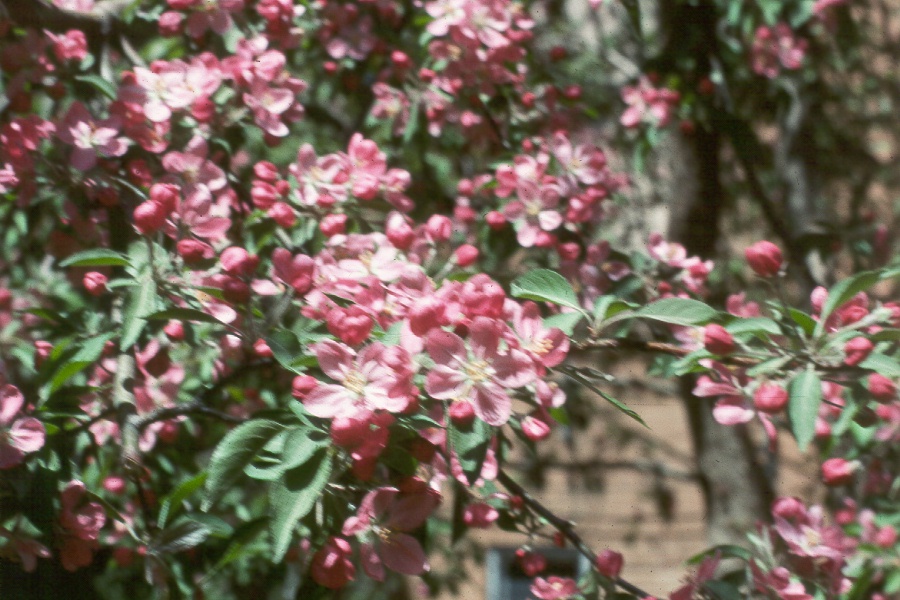
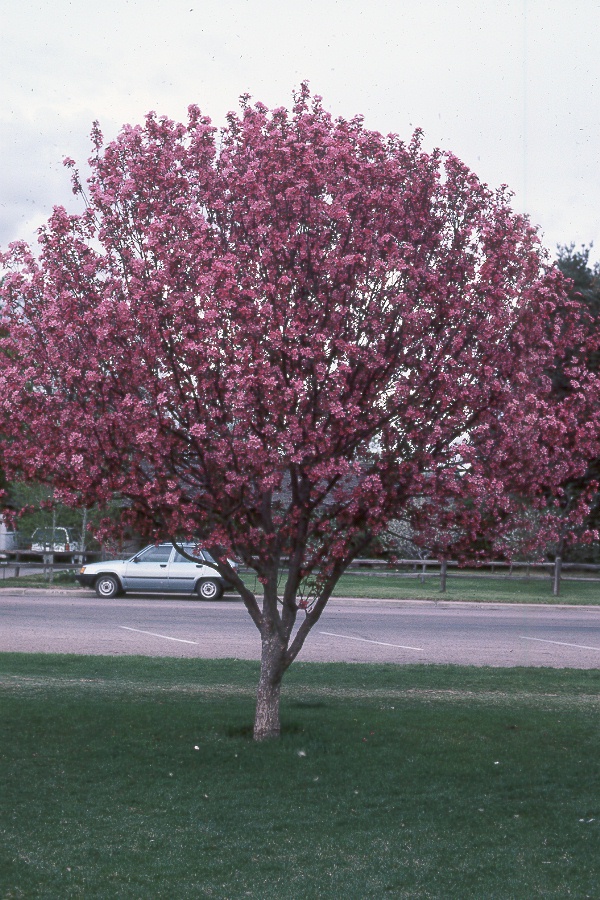
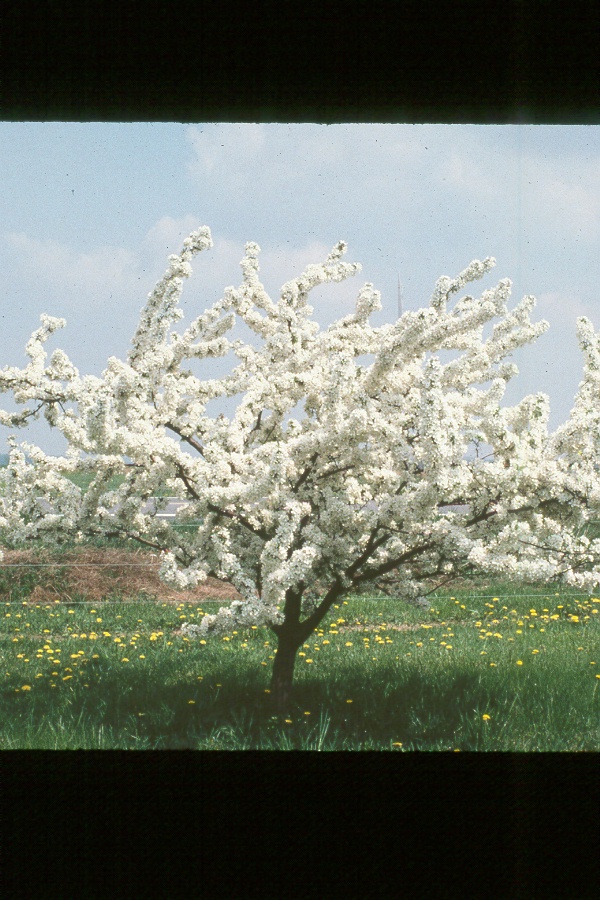
Malus sp. - Flowering Crabapple
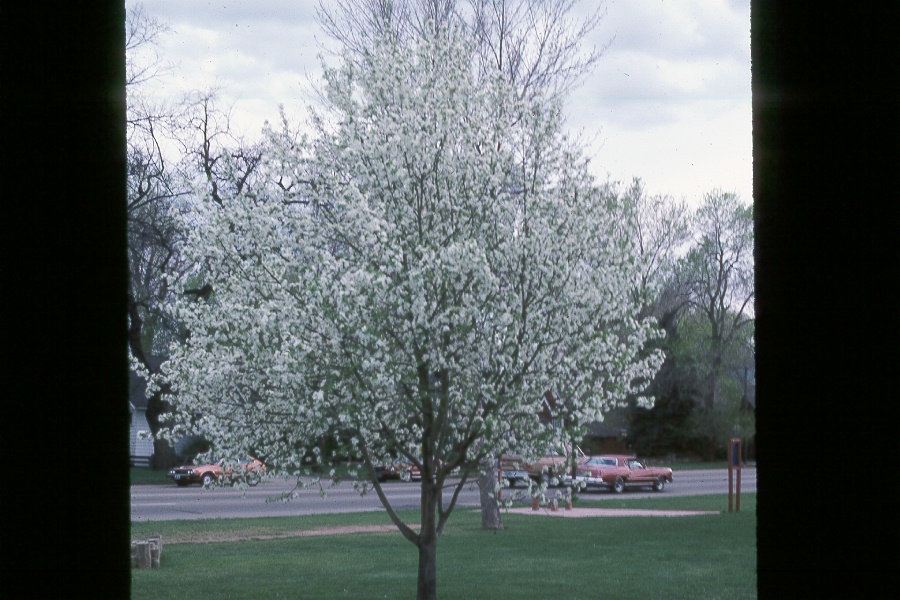
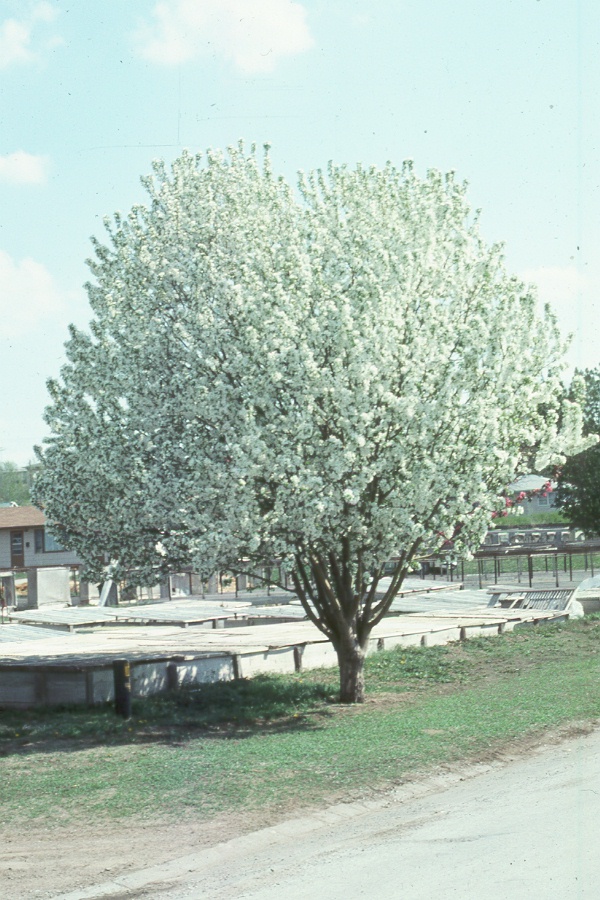
There are few other trees or shrubs
that approach the beauty of a crabapple tree in full bloom.
Crabapples are valued for their foliage,
flowers, fruit, and variations in size and habit. By using
different varieties, the flowering
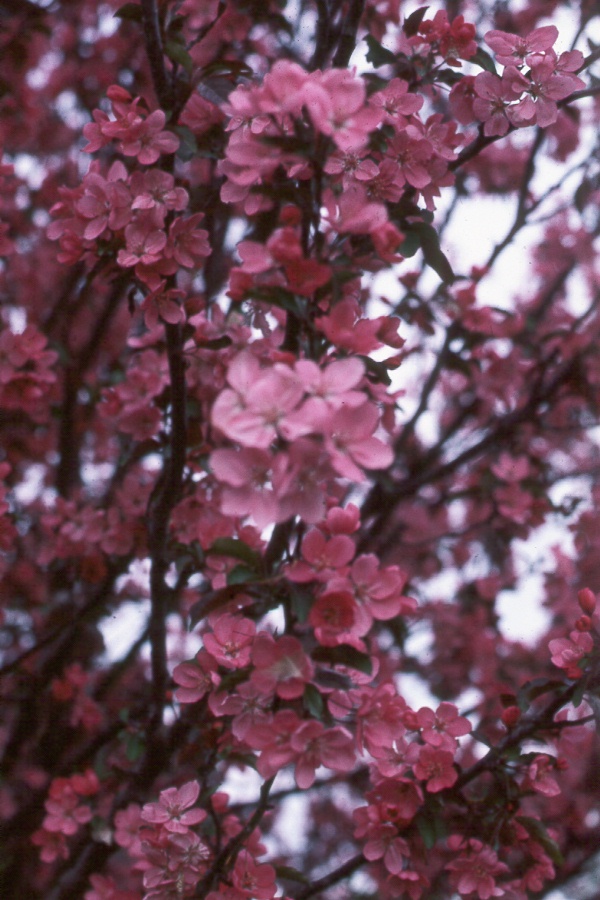
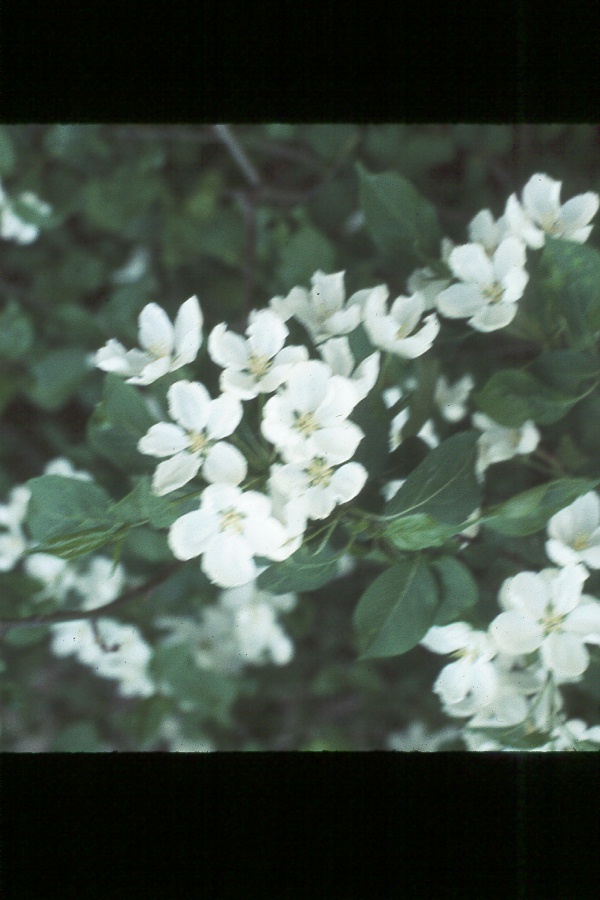
period can be extended from early May to early June, with colors
ranging from white through purplish
red.
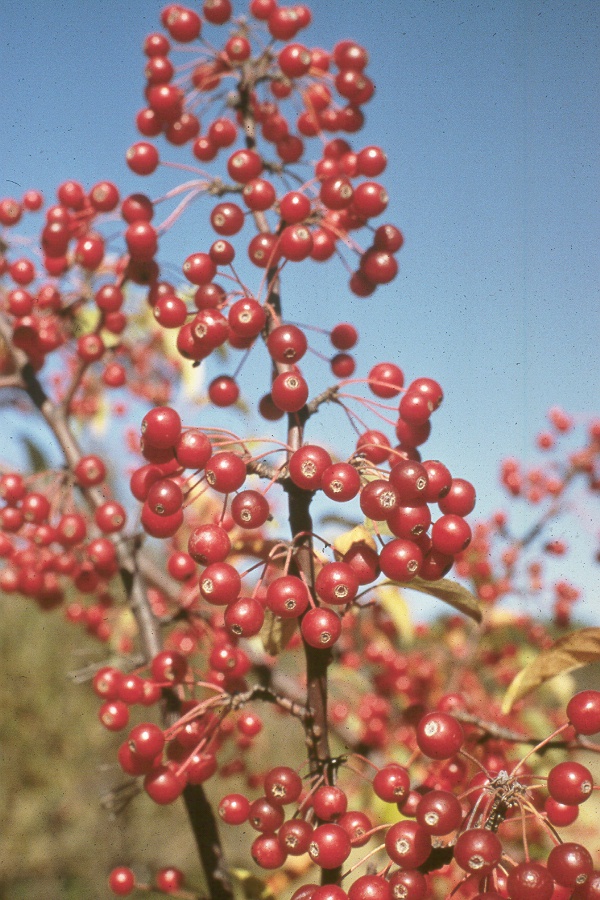
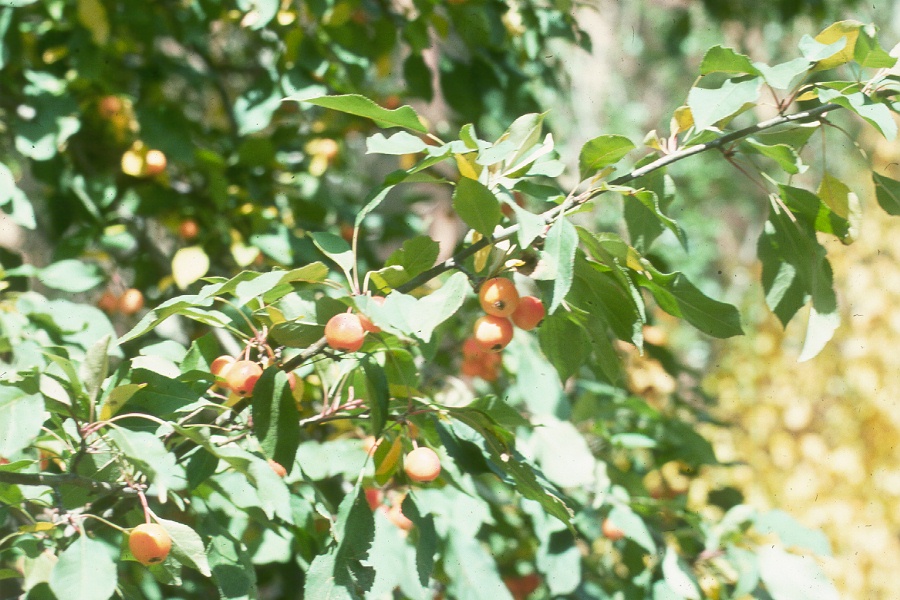
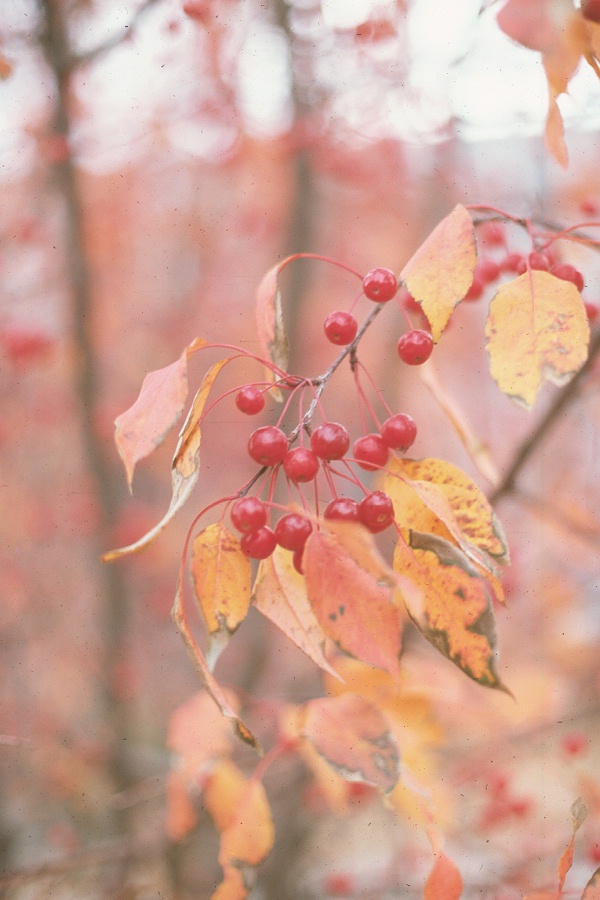
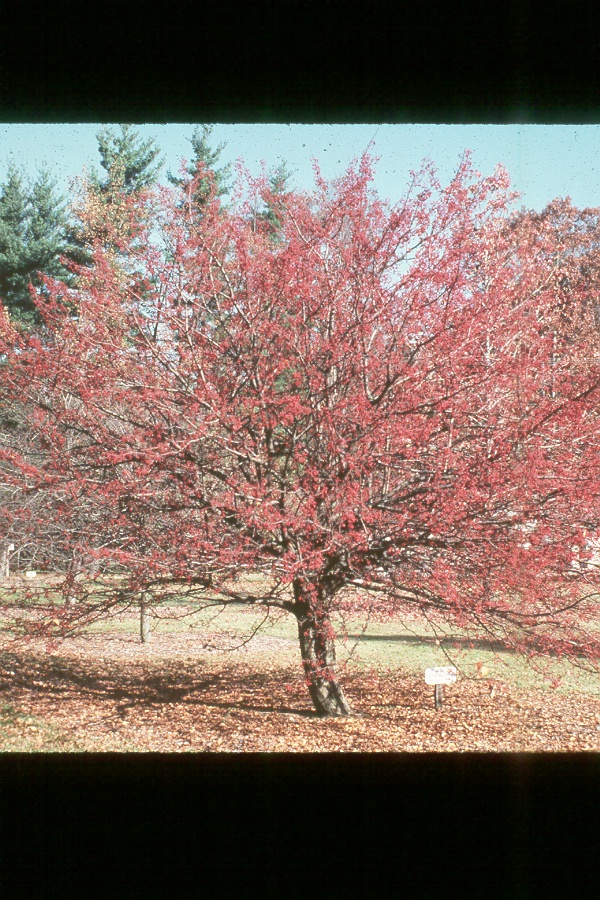
The small fruits, borne in the fall,
are also effective, with colors of red, yellow, and green. Other
features of this group are the small
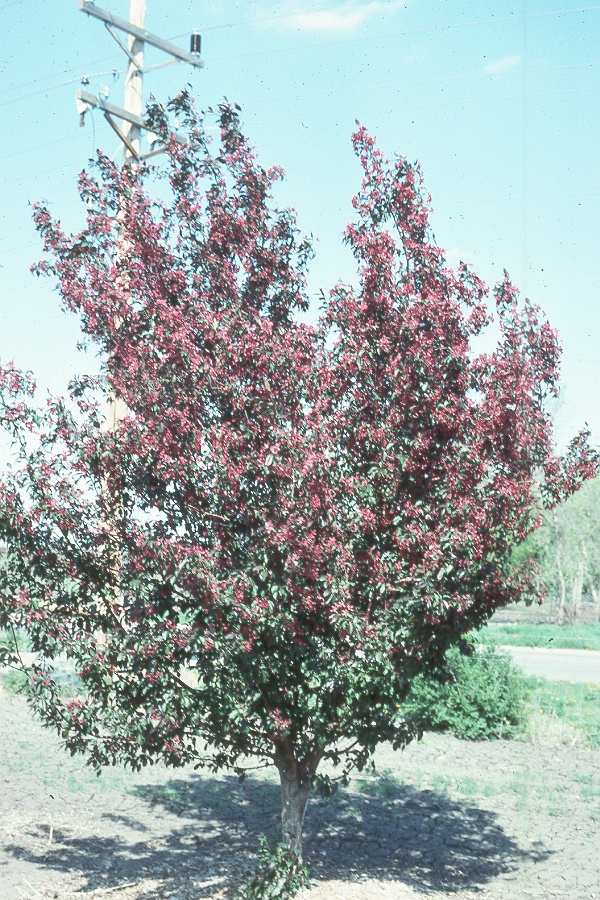
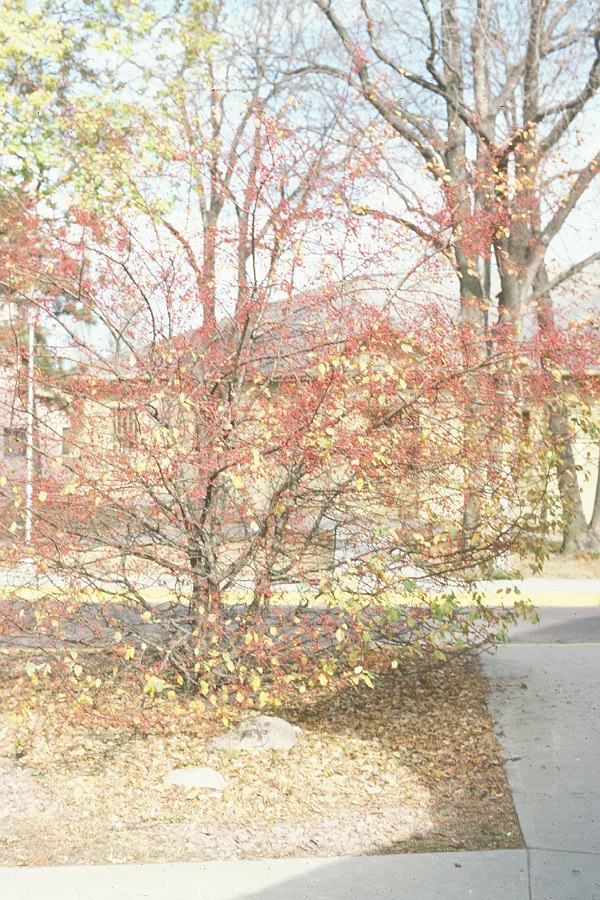
size (most less than 25 feet in height) and the variation in growth
habit (rounded, horizontal, pendulous,
fastigiate, and vase shaped). Crabapples are suited for the
home grounds, schools, parks, commercial
and public buildings, and highway plantings.
A. CHARACTERISTICS
1) Deciduous trees and shrubs, rarely half evergreen; most are between 15-25' in height at maturity.
2) Shape: Range from low mound like plants, to narrow upright or pendulous types.
3) Branches: Alternate, upright, horizontal, or drooping rarely with spinescent branches.
4) Buds: Ovoid, with several imbricate scales.
5) Leaves: Serrate or lobed, folded or convolute in bud, stipulate.
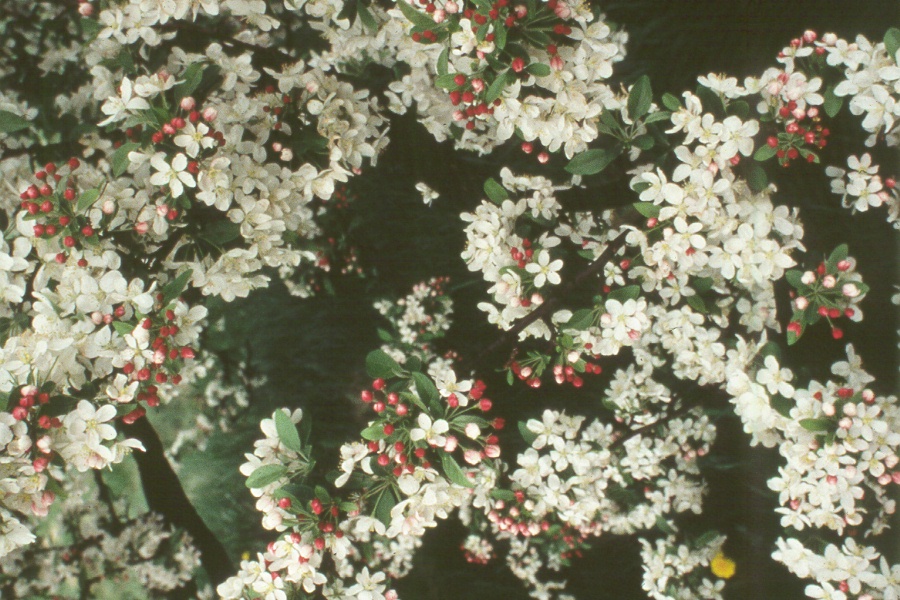
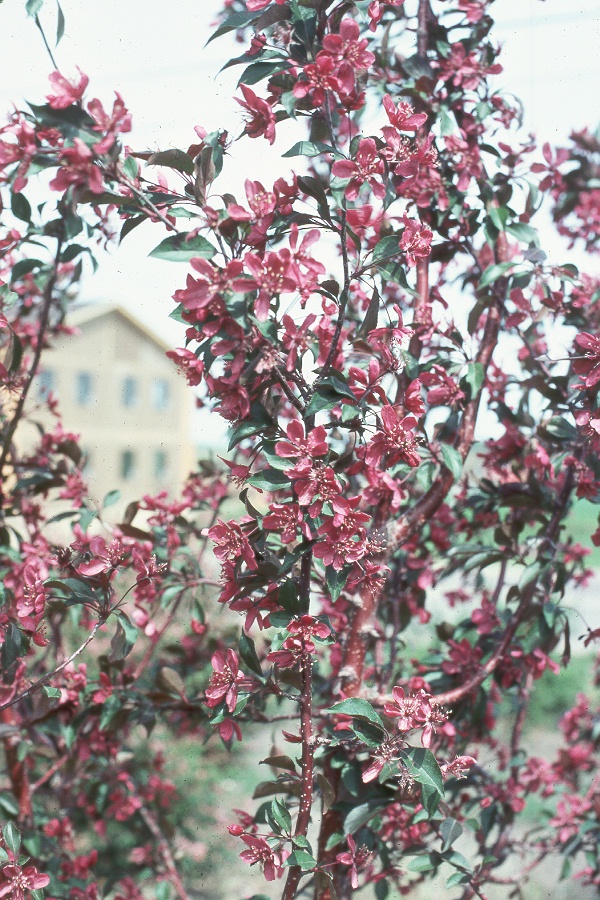
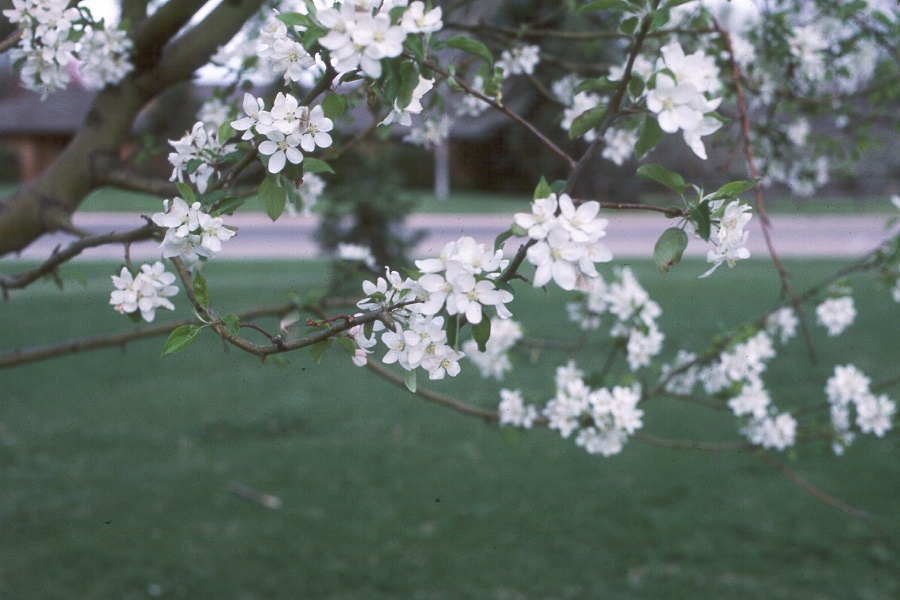
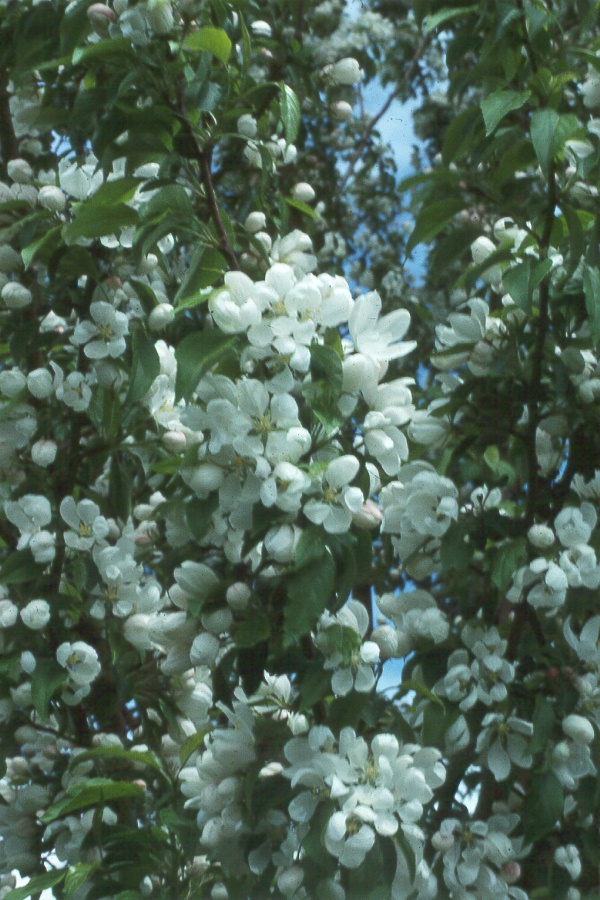
6) Flowers: White to pink or
carmine to red or rose. Single flowers have 5 petals, semidouble
5-10
petals, and a double flower 10 or more petals. Flowers occur in umbels
or corymbs.
Petals are small suborbicular or obovate, stamens 15 to 20, usually with
yellow anthers.
Ovary is inferior, 3 to 5 celled; styles present from 2 to 5, connate at
the base.
7) Fruit: A pome with persistent
or deciduous calyx; colors range from red to yellow to green.
If fruit is 2" in diameter or less, it is a crabapple. If the fruit
is larger than 2", then it is
classified as an apple.
B. HABITAT
There exists more than 40 species
of crabapples in the temperate regions of North America, Europe,
and Asia. Currently, at least
100 types of crabapples are grown in North American nurseries, with at
least 134 additional types in arboreta
and botanical gardens (roughly 250 types).
Origin of Selected Crabapple Seedlings:
Europe North America Asia
Florentina
Coronaria
Baccata (N.E. Asia to China)
Pumila
Augustifolia
Floribunda (Japan)
Sylvestria
Glabrata
Halliana (Japan)
Glancescens
Hupehensis (China)
Fusca
Sargenta (Japan)
Lancifolia
Sieboldi (Japan)
Platycarpa
Spectabilis (Japan)
Bracteata
Ioensis
Hybrids
Malus arnoldiana - (Floribunda
x Baccata)
Malus atrosanguinea - (Sieboldi
x Halliana)
Malus micromalus - (Spectabilis
x Baccata)
Malus purpurea - (Pumila Niedwetzkyana
x Atrosanguinea)
Malus zumi - (Baccata mandschunica
x Sieboldi)
Malus almey - (Redvein x Siberian)
Malus hopa - (Siberian x Redvein)
Malus Dorothea - (Halliana
parkmani x Arnoldiana)
Malus Katherine
- (Halliana x Baccata)
Malus Van Eseltine - (Amoldiana
x Spectabilis)
C. GENERAL CULTURE
Crabapples are quite adaptable to
varying soil conditions, but have been observed to do best in
heavy loam. The soil should be well
drained regardless of type. Crabapples do best when planted
in full sun for best development
of flowers and fruits. The Asiatic forms are much more resistant
to insects and diseases than are
the forms native to North America.
Generally, crabapples require little
pruning, but if any is done, it should be completed before mid June.
Most crabapples initiate flower buds
for the next season in late June - early June and pruning at
this time or later would result in
decreased flower production the following year. Pruning may be
done, however, to remove sucker growth,
open up the center of the tree to light and air, to cut off
out-of-place branches and to shape
the tree.
D. PROPAGATION
Practically all flowering crabs are
self-sterile and are propagated by budding, grafting, or some
softwood cuttings. Three crabapples
are, however, commonly propagated from seed and come
entirely true to type; these include
hupehensis,
sikkimensis,
and toringoides.
Crabapples are often grafted, using
a whip graft, or are budded in mid to late August. The
preferred understocks are the various
types of native American species, but frequently common
apple seedlings are utilized.
In addition to grafting and budding, a few crabapples such as Arnold,
Carmine or Sargent are propagated
from softwood cuttings taken from mid June through July.
E. INSECTS AND DISEASES
The Asiatic types are much more resistant to insects and diseases than species native to North America.
1) Borers: (Cultural control - keep
the plants growing well with adequate fertilization and watering practices).
For preventive control - use tree wrap impregnated with Dieldrin 2'-3'
up the trunk of the tree
from ground level.
2) Aphids: A serious problem generally
only on native species. Adequate control can be obtained by
spraying the trees with malathion at the rate of 2 1/2-4 lbs. per 100 gallons
of water.
3) Scale: Generally two types attack
crabapples - San Jose and Oyster Shell and control can be by
using a dormant oil as a spray before bud break or with malathion at the
crawling stage of
the scales.
4) Apple Scab: The native North American
species and hybrids and the native apple (Malus pumila)
are quite susceptible to this disease. Fruits show darkened, leathery
spots with many small
cracks. The leaves also have darkened spots which may look black or velvety.
5) Fireblight: The diseased plants
have the appearance of being scorched by fire. Generally, the first
visible signs of infection is often a drying up of the tips of young shoots
and budclusters.
This disease is caused by bacteria which is spread by aphids, leaflioppers,
and even bees.
Carelessness in handling diseased leaves and branches, and failure to adequately
disinfect
pruning equipment contributes to the spread of the disease.
6)Cedar Apple Rust: (Asiatic varieties
are resistant) This disease appears on apple leaves in May as yellow
leaf spots which subsequently enlarge, resulting in heavy leaf drop.
The disease has
an alternate host Red Cedars (Juniperus virginiana). Galls appear
on Red Cedars in early
April, and spores produced by these galls later infect apple trees.
Malus x Zumi calocarpa - Calocarpa or Redbud Crabapple
SPRING HABIT WINTER HABIT
FLOWER FRUITMalus x 'Royalty' - Royalty Crabapple
HABIT FLOWERMalus x 'Hopa' - Hopa Crabapple
SPRING HABIT FLOWER FRUITMalus x 'Radiant' - Radiant Crabapple
SPRING HABIT FLOWER FRUITMalus baccata - Siberian Crabapple
SPRING HABIT WINTER TEXTURE FLOWERMalus x 'Dolgo' - Dolgo Crabapple
SPRING HABIT FLOWERMalus x 'Spring Snow' - Spring Snow Crabapple
SPRING HABIT FLOWER